



Content Head and Video Creator, FirstLease
Open Office vs Cubicle: Which Workspace Wins in 2026
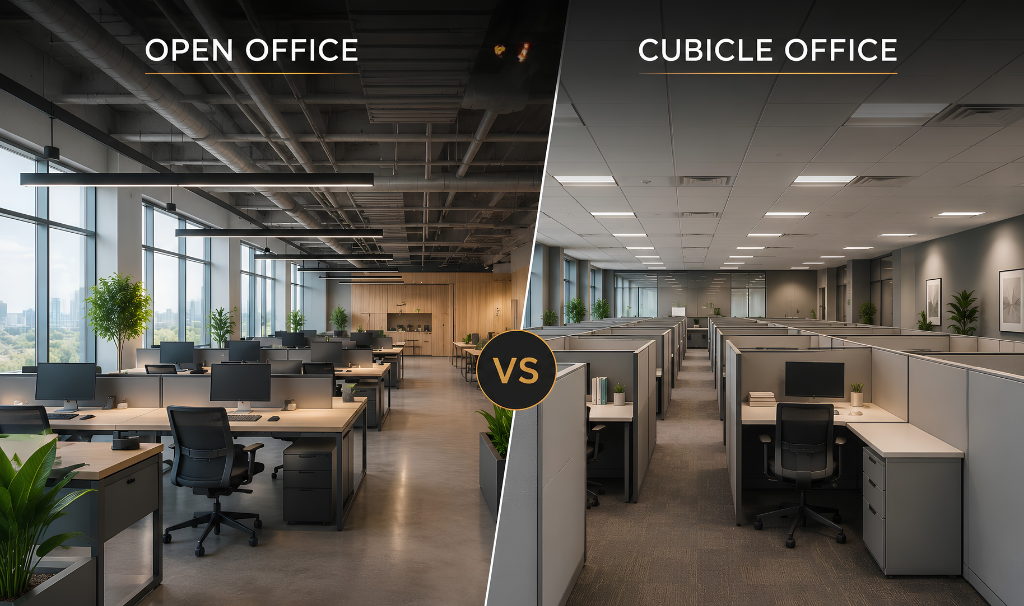
The way people work has changed significantly over the last few years. Businesses are no longer looking for office spaces that simply accommodate employees. Instead, they want workplaces that support productivity, collaboration, employee wellbeing, and future growth. This shift has brought one question back into focus: should a company choose an open office or a cubicle layout?
The debate around open office vs cubicle is not new. Some organizations prefer open workspaces because they encourage communication and teamwork. Others continue to rely on cubicles because they provide privacy and help employees concentrate on their work. In 2026, there is no one-size-fits-all answer. The right choice depends on how a company operates and how its employees work on a daily basis.
Before deciding on an office layout, it is important to understand what each design offers and where it performs best.
What is an Open Office Layout?
An open office layout is a workspace design where employees work in a shared environment with little or no physical barriers between workstations. Instead of separate cabins or enclosed desks, teams sit together in a common area.
This office design became popular among startups and technology companies because it allows employees to communicate more freely. Questions can be answered quickly, ideas can be shared instantly, and teams can work together without constantly moving between meeting rooms.
Modern open offices often include collaborative zones, breakout spaces, lounge areas, and informal meeting corners. The goal is to create an environment where communication feels natural and teamwork happens effortlessly.
What is a Cubicle Office Layout?
A cubicle office layout divides a larger office floor into individual workstations using partitions. Each employee gets a designated workspace that offers a degree of privacy while still remaining part of the larger office environment.
Cubicles became popular because they provide employees with their own space without requiring separate offices. They help reduce distractions and allow employees to focus on tasks that require concentration.
Today, cubicle office designs have evolved significantly. Modern cubicles are more spacious, visually appealing, and designed to support both comfort and productivity.
Open Office vs Cubicle: Key Differences-
1. Collaboration and Communication - One of the biggest advantages of an open office layout is the ease of communication. Employees can interact without scheduling formal meetings, making teamwork faster and more efficient. For example, sales teams, marketing departments, and creative professionals often benefit from open office environments because collaboration is a regular part of their work.
2. Productivity and Focus - The relationship between office design and productivity often depends on the nature of the work being performed. Employees who spend their day analyzing data, preparing reports, writing code, or managing financial information usually need fewer distractions. In such cases, cubicles can improve focus and help employees work more efficiently.
3. Privacy and Confidentiality - Privacy is one area where cubicles have a clear advantage. Employees handling sensitive information often need a workspace that minimizes interruptions and protects confidential discussions. Finance teams, legal professionals, and customer support departments frequently prefer cubicle office layouts for this reason.
4. Space Utilization - Open office layouts generally make better use of available space. Since there are fewer partitions and enclosed structures, businesses can accommodate more employees within the same area.
5. Employee Experience - Different employees have different workplace preferences. Some people enjoy the energy and interaction that comes with an open office. Others prefer having a dedicated workspace where they can focus without interruptions.
Advantages of Open Office Layouts-
Open office spaces continue to be popular for several reasons:
1. Encourage collaboration and teamwork.
2. Improves communication between departments.
3. Makes office space more flexible.
4. Reduces construction and fit-out costs.
5. Creates a modern and dynamic workplace environment.
6. Supports quick decision-making and problem-solving.
For organizations that rely heavily on teamwork, these benefits can have a positive impact on business performance.
Advantages of Cubicle Office Layouts-
Cubicles continue to offer several practical benefits:
1. Greater privacy for employees.
2. Better concentration and focus.
3. Reduced workplace distractions.
4. Improved handling of confidential information.
5. Dedicated personal workspace.
6.Better noise control compared to open offices.
For businesses where accuracy and concentration are critical, these advantages often outweigh the benefits of an open office.
Cost Comparison: Open Office vs Cubicle-
Cost is often an important consideration when planning an office space.
Open office layouts are generally more cost-effective because they require fewer partitions and less complex construction work. They also allow businesses to maximize available floor space.
Cubicle office layouts typically involve additional expenses related to workstation systems, partitions, acoustic materials, and installation. While the initial investment may be higher, the benefits of improved productivity and privacy can justify the cost for certain organizations.
Rather than focusing solely on setup costs, businesses should evaluate how the chosen layout will affect employee performance and long-term operational efficiency.
Which Industries Prefer Open Offices?
Open office designs are commonly used by:
1. Marketing agencies
2. Advertising companies
3. Technology startups
4. Sales organizations
5. Media companies
6. Creative teams
7. Product development departments
These industries often depend on regular communication and collaborative work, making open layouts a natural choice.
Which Industries Prefer Cubicles?
Cubicle office layouts remain popular in:
1. Legal firms
2. Financial institutions
3. Insurance companies
4. BPO operations
5. Customer support centers
6. Administrative departments
7. Government offices
These organizations typically require greater focus, confidentiality, and structured workflows.
Common Mistakes to Avoid-
1. Choosing a Layout Based on Trends - Just because a particular office design is popular does not mean it is suitable for every business. The layout should reflect how employees actually work.
2. Ignoring Employee Feedback - Employees spend most of their day in the office. Gathering their input can provide valuable insights when planning a workspace.
3. Overlooking Noise Management - Even the best office design can become ineffective if noise levels are not properly managed.
4. Failing to Plan for Growth - Businesses should choose office layouts that can adapt as teams expand and workplace requirements change.
Conclusion-
The discussion around open office vs cubicle is not about determining a universal winner. Both office layouts offer unique benefits, and the right choice depends on the needs of the business.
Open offices support collaboration, communication, and flexibility, making them ideal for teams that thrive on interaction. Cubicles provide privacy, focus, and structure, making them well-suited for employees who handle detailed or confidential work.
In 2026, many organizations are finding success by combining elements of both designs and creating workplaces that support different work styles. The best office layout is one that helps employees perform their best while supporting the company's long-term goals.
At FirstLease, we understand that every business has unique workspace requirements. Whether you're looking for a collaborative open office, a structured cubicle setup, or a balanced hybrid workplace, choosing the right office design can play a major role in improving productivity, employee satisfaction, and business growth.
FAQs
1. Which is better: an open office or a cubicle?
The answer depends on the type of work being performed. Open offices support collaboration, while cubicles provide greater privacy and focus.
2. Are open offices still relevant in 2026?
Yes. Open office layouts remain popular, particularly among startups, technology companies, and creative teams.
3. Do cubicles improve productivity?
For employees who require concentration and minimal distractions, cubicles can significantly improve productivity.
4. Which office layout is more cost-effective?
Open office layouts are generally more affordable because they require fewer partitions and make better use of available space.
5. What is the best office design for modern businesses?
Many organizations now prefer hybrid office layouts that combine collaborative spaces with private work areas, offering the benefits of both open offices and cubicles.