



Content Head and Video Creator, FirstLease
Why Workplace Mobility Drives Transit-Ready Offices
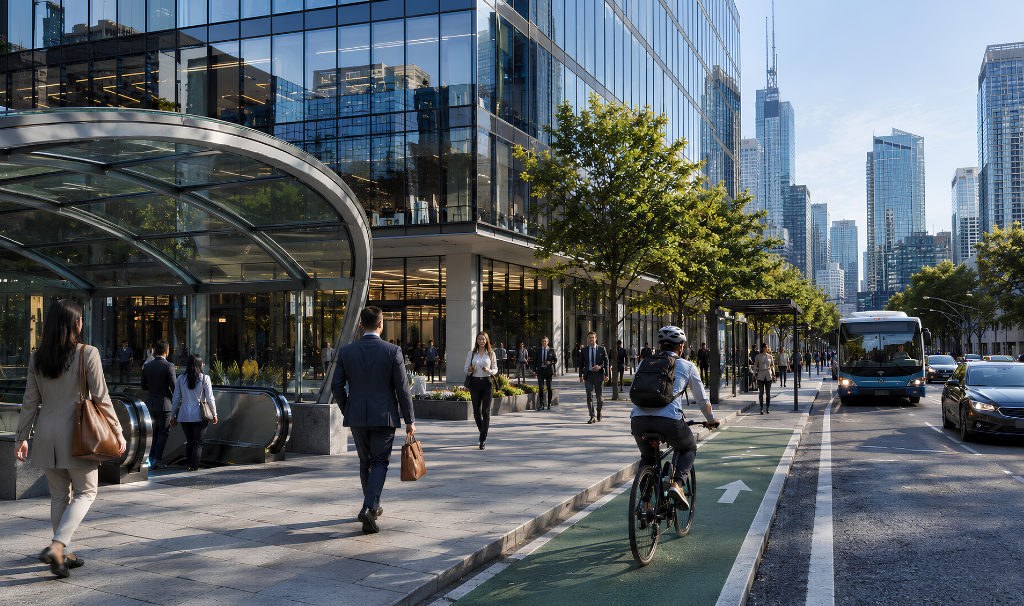
Workplace mobility is changing the way businesses choose office locations. Companies now prefer offices that are easy to reach through metro routes, bus networks, highways, and major transit hubs. A well-connected office reduces employee commute stress, improves punctuality, and makes daily office travel more convenient for teams, clients, and business partners.
Transit-ready offices are also becoming important for hybrid and flexible work models. When employees visit the office, they expect the location to be practical and accessible. Offices near transit hubs support better productivity, stronger employee satisfaction, and smoother business operations, making workplace mobility a key factor in modern office leasing.
1. Workplace Mobility Is Changing Office Leasing:
Workplace mobility is now an important part of modern office planning. Businesses are no longer choosing office spaces based on rent, size, or interiors. They are also looking at how easily employees, clients, and partners can reach the workplace.
This is why workplace mobility in office leasing has become a key factor for companies. A well-connected office location can reduce travel stress, improve attendance, and create a better employee experience.
2. Transit-Ready Offices Support Employee Convenience:
- Today’s employees prefer offices that are easy to access through metro, bus, railway, highways, and main roads.
- Long and difficult commutes can affect productivity, punctuality, and work-life balance.
That is why transit-ready offices for businesses are becoming more popular. These offices help teams save travel time and make daily office visits smoother and more comfortable.
3. Offices Near Transit Hubs Improve Accessibility:
One of the biggest advantages of offices near transit hubs is better connectivity. When an office is close to a metro station, bus stop, or major road network, it becomes easier for people from different parts of the city to reach the workplace.
This also benefits clients, vendors, and business partners who need to visit the office regularly. A location with strong transport access can make the company look more professional and approachable.
4. Workplace Mobility Trends 2026 Focus on Flexibility:
One of the major workplace mobility trends in 2026 is the demand for flexible and accessible office locations. With hybrid work becoming common, employees may not visit the office every day, but when they do, they expect the commute to be simple.
Businesses are now choosing office spaces that support flexible work models, better team movement, and easier access from major residential and commercial areas.
5. Metro-Connected Offices Add Business Value:
The benefits of metro-connected offices go beyond employee convenience. These offices can improve attendance, support better talent attraction, increase client accessibility, and strengthen the company’s overall business image.
For companies planning long-term growth, a metro-connected office can become a smart investment. It supports both daily operations and future expansion needs.
6. Transit-Ready Locations Help Attract Talent:
Employees often consider commuting time before joining or staying with a company. If the office is located in a difficult-to-reach area, it may affect hiring and retention.
A transit-ready office helps businesses attract skilled professionals by offering a more convenient workplace location. This is especially important in large cities where travel time is a major concern.
7. Better Connectivity Supports Business Growth:
A well-connected office can improve coordination between teams, clients, and leadership. It also helps businesses manage meetings, site visits, and daily operations more efficiently.
Choosing an office near transit hubs is not just a location decision. It is a workplace strategy that supports productivity, employee satisfaction, and business growth.
Conclusion:
Workplace mobility is becoming a major factor in office leasing decisions. Businesses now prefer transit-ready offices because they offer better connectivity, employee convenience, and long-term operational benefits.
At FirstLease, we help businesses find office spaces in well-connected locations that support workplace mobility, employee comfort, and future growth. From office leasing to location advisory, FirstLease makes workspace decisions easier, smarter, and more strategic.
FAQs
1. What is workplace mobility in office leasing?
Workplace mobility in office leasing means choosing office locations that are easy to access through metro, bus, highways, railway stations, and other transport networks.
2. Why are transit-ready offices important for businesses?
Transit-ready offices are important because they reduce commute stress, improve employee convenience, and make it easier for clients and partners to visit the workplace.
3. Why do companies prefer offices near transit hubs?
Companies prefer offices near transit hubs because they offer better accessibility, smoother travel, improved attendance, and stronger employee satisfaction.
4. What are the benefits of metro-connected offices?
The benefits of metro-connected offices include reduced travel time, better talent attraction, improved client access, higher productivity, and a stronger business image.
5. How can FirstLease help in finding transit-ready offices?
FirstLease helps businesses identify and lease office spaces near key transit hubs, metro routes, commercial districts, and talent-friendly locations across major Indian cities.