



Content Head and Video Creator, FirstLease
Sustainable Office Design: LEED & WELL Certified Workspaces!
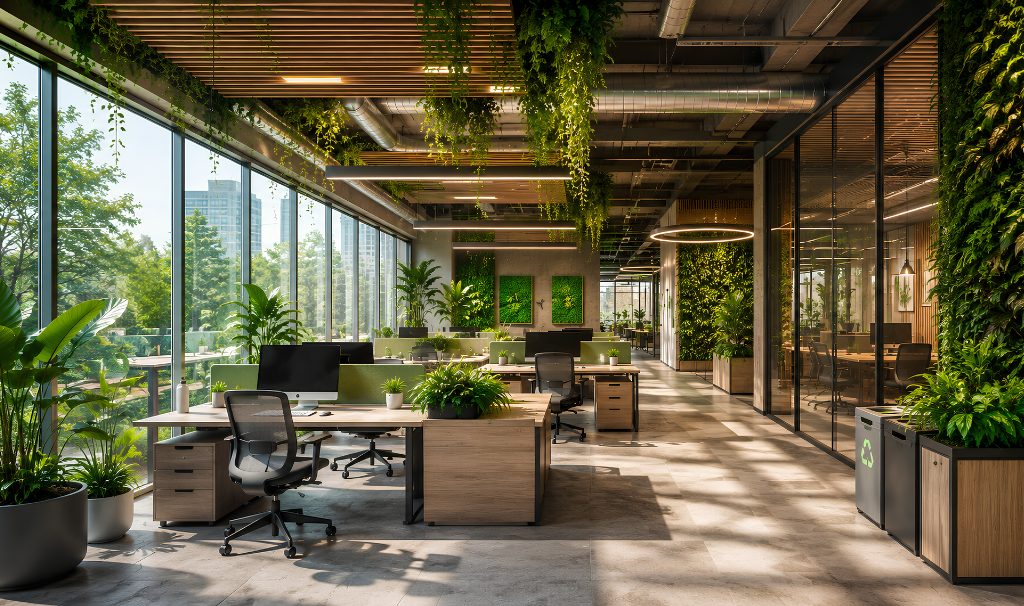
What if your office could reduce energy consumption, improve employee well-being, lower operating costs, and support your sustainability goals at the same time?
That’s the idea behind sustainable office design.
Businesses today are moving beyond traditional workspaces and investing in offices that are environmentally responsible, energy-efficient, healthy, and designed around employee needs. From natural lighting and better indoor air quality to smart technology and biophilic elements, green office design is transforming the modern workplace.
Two globally recognised standards driving this change are LEED certification and WELL certification.
What is Sustainable Office Design?
Sustainable office design focuses on creating workplaces that minimise environmental impact while improving efficiency, comfort, and employee well-being.
It considers everything from energy consumption and water usage to materials, lighting, ventilation, waste management, and workplace ergonomics.
Key features of a sustainable office can include:
- Energy-efficient lighting and HVAC systems
- Natural light and ventilation
- Water-efficient fixtures
- Sustainable and recycled materials
- Indoor plants and biophilic design
- Smart building technology
- Waste reduction and recycling
- Ergonomic furniture
- Efficient space utilisation
The goal is to create a workplace that is efficient, comfortable, healthy, and better for the environment.
What Is LEED Certification?
LEED (Leadership in Energy and Environmental Design) is one of the world's most recognised green building certification systems.
A LEED-certified office is designed and operated according to standards that promote environmental sustainability and resource efficiency.
LEED considers factors such as:
- Energy efficiency
- Water efficiency
- Sustainable materials
- Indoor environmental quality
- Waste management
- Location and transportation
- Innovation
For businesses, a LEED-certified workspace can support sustainability objectives while encouraging more efficient use of energy, water, and other resources.
What Is WELL Certification?
While LEED focuses strongly on environmental performance, WELL certification puts people at the centre of workplace design.
The WELL Building Standard considers how the physical workplace can support employee health, comfort, wellness, and overall experience.
A WELL-certified office may focus on:
- Indoor air quality
- Water quality
- Lighting
- Thermal comfort
- Acoustics
- Physical movement
- Mental well-being
- Nourishment
- Community
In simple terms, LEED helps create a workplace that is better for the planet, while WELL focuses on creating a workplace that is better for people.
Why Combine LEED and WELL?
Businesses don't have to choose between sustainability and employee wellness.
Combining LEED and WELL principles can help organisations create a workplace that addresses both environmental performance and human well-being.
For example, an office can use energy-efficient lighting to reduce consumption while also ensuring that lighting levels provide a comfortable environment for employees. Similarly, efficient HVAC systems can reduce energy use while supporting better indoor air quality.
This integrated approach makes LEED and WELL-certified workspaces increasingly attractive to businesses looking for future-ready offices.
Key Features of Sustainable Office Design
1. Energy-Efficient Systems
LED lighting, smart controls, occupancy sensors, and energy-efficient HVAC systems can reduce unnecessary energy consumption and improve workplace efficiency.
2. Natural Light and Ventilation
Maximising natural daylight can create brighter and more comfortable workspaces while reducing dependence on artificial lighting. Good ventilation is equally important for maintaining a healthy indoor environment.
3. Biophilic Office Design
Bringing nature into the workplace through plants, greenery, natural textures, wooden finishes, and outdoor views can create a more engaging environment. Biophilic office design has become an important trend in modern workplace planning.
4. Sustainable Materials
Businesses can make their office interiors more sustainable by using recycled, durable, responsibly sourced, and low-emission materials.
5. Healthy Indoor Environment
Air quality, temperature, lighting, and acoustics all influence workplace comfort. A well-designed office should create an environment where employees can work comfortably throughout the day.
6. Smart Workplace Technology
Smart sensors, occupancy monitoring, automated lighting, intelligent HVAC systems, and workplace management technology can help businesses improve office space utilisation while reducing unnecessary resource consumption.
Benefits of Sustainable Office Design:-
Investing in sustainable workplace design can deliver benefits beyond environmental responsibility.
- Lower Operating Costs- Energy-efficient lighting, HVAC systems, and water-saving solutions can help businesses reduce ongoing operational expenses.
- Improved Employee Well-Being- Better lighting, air quality, acoustics, thermal comfort, and ergonomic design can contribute to a more comfortable workplace experience.
- Stronger ESG Credentials- A green office can support an organisation's wider environmental, social, and governance (ESG) objectives and demonstrate its commitment to sustainability.
- Better Brand Image- A sustainable and wellness-focused workplace can strengthen a company's image among employees, customers, investors, and business partners.
- Future-Ready Workspaces- As sustainability and employee experience become increasingly important, businesses that invest in energy-efficient and wellness-focused offices can be better prepared for the future.
How to Create a Sustainable Office?
Creating a sustainable workplace starts with choosing the right building and planning the office around both business and employee requirements.
Businesses should evaluate factors such as energy performance, accessibility, infrastructure, water efficiency, indoor environmental quality, connectivity, and space utilisation before selecting a property.
The next step is to develop an office layout that supports productivity, collaboration, flexibility, employee comfort, and future growth.
Working with experienced commercial real estate consultants and office interior designers can help businesses make informed decisions throughout this process.
Conclusion:
The future of office design is moving towards workplaces that are greener, healthier, smarter, and more people focused. Sustainable office design is no longer simply about adding a few plants or switching to LED lights - it is about creating an entire workplace ecosystem that balances environmental responsibility with employee well-being.
LEED certification can help businesses focus on energy efficiency, resource conservation, and sustainable building practices, while WELL certification brings greater attention to health, comfort, and workplace wellness. Together, they can provide a strong foundation for creating a truly future-ready workspace.
For businesses looking to find the right property and build a workplace aligned with their sustainability and operational goals, FirstLease provides end-to-end commercial real estate support - from identifying suitable commercial office spaces to evaluating properties and planning workplace solutions.
Because the office of the future shouldn't just work better - it should work better for people and the planet.
Frequently Asked Questions
1. What is sustainable office design?
Sustainable office design focuses on creating energy-efficient, environmentally responsible, and employee-friendly workplaces. It can include energy-saving systems, natural lighting, sustainable materials, water-efficient solutions, better indoor air quality, and biophilic office design.
2. What is the difference between LEED and WELL certification?
LEED certification primarily focuses on a building's environmental performance, including energy, water, materials, and resource efficiency. WELL certification focuses more on employee health, wellness, comfort, air quality, lighting, acoustics, and the overall workplace experience.
3. What are the benefits of a LEED-certified office?
A LEED-certified office can help businesses improve energy and water efficiency, reduce resource consumption, support sustainability goals, enhance environmental performance, and create a more efficient workplace.
4. Why is WELL certification important for offices?
WELL certification focuses on creating healthier and more comfortable workplaces. It considers factors such as indoor air quality, lighting, thermal comfort, acoustics, movement, water quality, and employee well-being.
5. How can FirstLease help businesses create sustainable workspaces?
FirstLease helps businesses with their commercial real estate requirements, including identifying suitable office spaces and evaluating properties based on location, infrastructure, operational needs, and workplace requirements. This can help businesses move towards more efficient, sustainable, and future-ready workspaces.