



Content Head and Video Creator, FirstLease
Hybrid Office Design in India Key Enterprise Trends for 2026
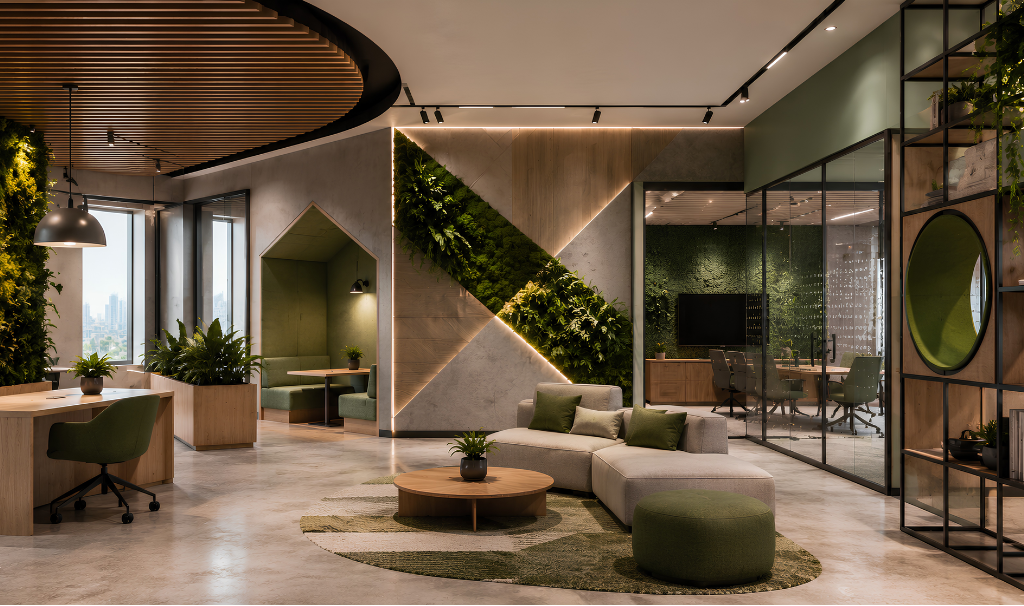
Hybrid working is no longer simply about allowing employees to work from home for a few days a week. In 2026, Indian enterprises are rethinking how offices are planned, designed and used to support collaboration, productivity, employee experience and business growth. Recent occupier research shows that 67% of Indian occupiers expect flexible workspaces to be part of their portfolio within the next two years, while 77% expect their office portfolios to expand.
This shift is making hybrid office design in India an important consideration for enterprises planning new offices, expanding existing facilities or redesigning workplaces for changing workforce patterns.
What is Hybrid Office Design?
Hybrid office design is the planning of a workplace around a workforce that divides its time between the office and other locations, such as home or flexible workspaces. Instead of providing an identical desk for every employee, enterprises can create a mix of individual workstations, collaboration areas, meeting rooms, focus spaces and informal zones.
The objective is to make the office more adaptable to different work patterns. A well-planned hybrid workplace can support employees when they come together for meetings, brainstorming and team activities while still providing quiet environments for focused work.
Why Hybrid Office Design Matters for Indian Enterprises in 2026?
The role of the office is changing. Employees increasingly expect workplaces to offer experiences and facilities that are difficult to replicate at home, while businesses want greater flexibility from their real estate portfolios.
Current market trends point towards quality, flexibility, sustainability and technology becoming increasingly important in Indian workplaces. CBRE's 2026 research also highlights workplace experience, commute infrastructure and sustainability among important occupier considerations.
For enterprises, this means office design needs to support both people and business objectives.
6 Key Hybrid Office Design Trends in India for 2026:-
1. Activity-Based Workspaces Are Replacing Fixed Desk-Only Layouts-
One of the biggest hybrid office design trends in India 2026 is the movement towards activity-based working.
Instead of assigning every employee a permanent desk, companies can provide different spaces for different activities:
- Focus rooms for uninterrupted work
- Collaboration areas for team discussions
- Meeting rooms for formal meetings
- Phone booths for private calls
- Informal lounges for casual conversations
- Breakout areas for social interaction
This approach allows enterprises to use their office footprint more efficiently while giving employees greater choice over where they work.
2. Flexible and Scalable Workspaces Are Becoming Essential-
Hybrid workplace design for Indian companies increasingly needs to accommodate fluctuating occupancy. Some days may bring high office attendance, while other days may have significantly fewer employees.
This is encouraging enterprises to consider:
- Hot-desking and desk-booking systems
- Modular furniture
- Flexible meeting rooms
- Multi-purpose spaces
- Shared amenities
- Scalable office layouts
Flexible workspaces are also becoming a more strategic part of corporate real estate portfolios rather than simply a short-term alternative to traditional offices.
3. Technology-Enabled Hybrid Meeting Spaces-
A hybrid workplace cannot depend only on attractive interiors. Technology needs to be integrated into the design from the beginning.
- Enterprises are increasingly considering:
- High-quality video conferencing
- Integrated displays
- Advanced microphones and speakers
- Reliable connectivity
- Video-enabled meeting rooms
- Occupancy and space-booking technology
When planning how to design a hybrid office in India, companies should ensure that employees joining remotely can participate in meetings almost as effectively as those physically present.
4. Focus Areas and Acoustic Privacy-
Open offices can encourage interaction, but they can also create distractions. This makes acoustic planning particularly important for hybrid workplaces.
A modern office can include:
- Acoustic panels
- Sound-insulated meeting rooms
- Phone booths
- Quiet zones
- Focus pods
- Private work areas
The objective is to create a workplace where employees can easily switch between collaboration and concentrated work.
5. Employee Experience Is Becoming a Design Priority-
The best hybrid office design ideas for enterprises go beyond desks, cabins and conference rooms.
Companies are increasingly creating workplaces that give employees a reason to come into the office. This can include:
- Comfortable lounges
- Cafeterias and breakout areas
- Wellness spaces
- Natural light
- Biophilic elements
- Recreational areas
- Collaborative social zones
This reflects a broader shift towards experience-led workplaces, where the office is designed as a destination for collaboration, culture and connection.
6. Sustainable and Future-Ready Office Design-
Sustainability is also becoming an important part of office design trends for hybrid work in India.
Enterprises can incorporate:
- Energy-efficient lighting
- Sustainable materials
- Natural ventilation where practical
- Indoor plants and biophilic design
- Smart building systems
- Efficient space utilisation
- Green building certifications
How Indian Companies Are Designing Hybrid Offices?
How Indian companies are designing hybrid offices is increasingly influenced by three questions: how employees work, how frequently they use the office and what the business expects from its real estate.
Instead of simply reducing the number of desks, enterprises are reallocating space towards collaboration, technology, employee amenities and specialised work settings. Activity-based layouts, hybrid meeting infrastructure and flexible workspaces are becoming important components of this approach.
For growing enterprises and GCCs, flexibility is particularly relevant. India's office market continues to see strong demand from GCCs, while flexible workspace adoption is expanding as companies seek scalability and operational flexibility.
Key Factors to Consider Before Designing a Hybrid Office:-
Before finalising a hybrid workplace, enterprises should evaluate:
- Employee attendance patterns - Understand actual office utilisation rather than assuming 100% occupancy.
- Team requirements - Different teams may require different combinations of focus and collaboration spaces.
- Technology infrastructure - Plan meeting and connectivity requirements alongside the interior layout.
- Space efficiency - Balance workstations with meeting, collaboration and amenity areas.
- Future growth - Keep the workplace adaptable as headcount and work policies change.
- Employee experience - Design spaces that encourage collaboration, comfort and productivity.
- Location and connectivity - Commute infrastructure is increasingly important when companies evaluate workplaces.
Benefits of a Well-Designed Hybrid Office:-
A thoughtfully planned hybrid workplace can help enterprises:
- Improve space utilisation
- Support different working styles
- Encourage collaboration
- Improve employee experience
- Accommodate changing headcounts
- Reduce underutilised space
- Support flexible work policies
- Create a stronger workplace identity
The goal should not simply be to fit more people into less space. It should be to create a workplace that delivers greater value from every square foot.
What Will Hybrid Offices Look Like Beyond 2026?
Hybrid offices are likely to become increasingly adaptable, technology - enabled and experience-driven. Flexible space, workplace analytics, activity-based planning and employee-centric amenities are likely to remain important as enterprises continue to refine their workplace strategies.
India's strong office demand also means that hybrid design should be viewed alongside long-term real estate planning. CBRE expects India's office stock to exceed 1 billion sq. ft. in 2026, with evolving workforce strategies and occupier requirements supporting continued demand.
Conclusion:-
Hybrid office design in India is evolving from a temporary response to changing work patterns into a long-term workplace strategy. In 2026, enterprises are looking beyond traditional desk-based offices and focusing on flexibility, collaboration, technology, sustainability and employee experience.
For businesses planning how to design a hybrid office in India, the right approach starts with understanding their people, operations, space requirements and future growth. FirstLease can support enterprises in identifying the right commercial space and developing workplace solutions aligned with their business requirements - from property search and evaluation to design, customisation and leasing support.
A future-ready office isn't just designed for where your business is today - it should be designed for where your business is going.
Frequently Asked Questions
1. What is hybrid office design?
Hybrid office design creates a flexible workplace that supports both in-office and remote employees through collaborative areas, focus zones, meeting rooms and technology-enabled spaces.
2. What are the latest hybrid office design trends in India for 2026?
Key trends include activity-based workspaces, flexible layouts, hot-desking, hybrid meeting rooms, acoustic privacy, employee-centric amenities, sustainable design and smart workplace technology.
3. How can companies design an effective hybrid office in India?
Companies should assess employee work patterns, occupancy levels, team requirements and future growth before planning a mix of workstations, collaboration spaces, meeting rooms and focus areas.
4. Why is flexible workspace important for enterprises?
Flexible workspace helps enterprises adapt their office footprint to changing workforce sizes, hybrid work policies and business expansion requirements while improving space utilisation.
5. How can FirstLease help with hybrid office requirements?
FirstLease helps businesses identify suitable commercial spaces based on location, size, budget and workplace requirements, along with support for property evaluation, leasing and workplace design solutions.