



Content Head and Video Creator, FirstLease
Buying vs Leasing Office Space in India: What’s Better?
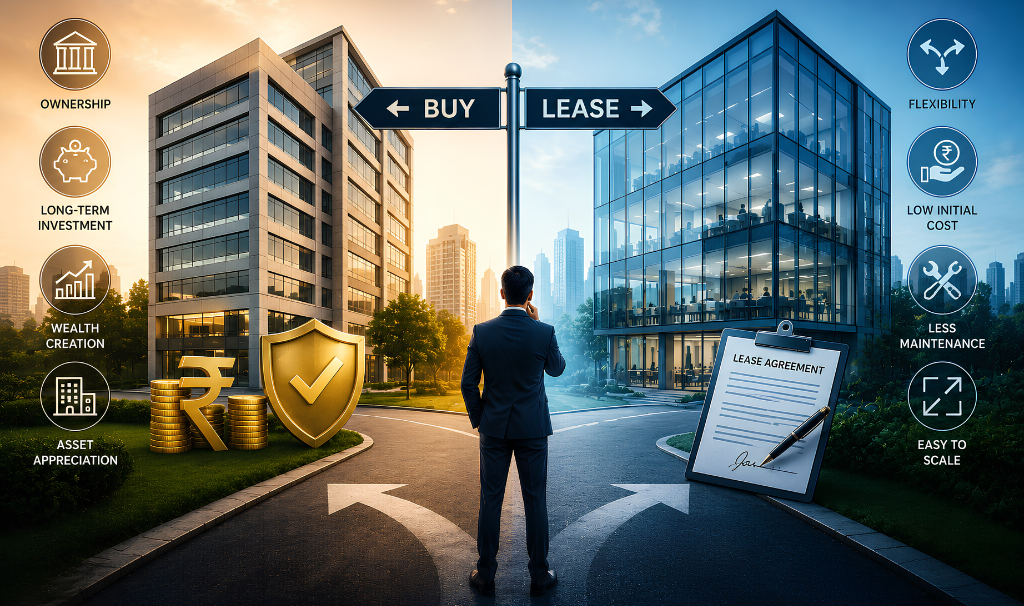
Choosing the right workplace is an important decision for every business. As companies expand, one of the biggest real estate questions they face is whether to purchase a property or rent one. Both options have financial and operational advantages, but the right choice depends on the company’s budget, growth plans, location requirements, and long-term objectives.
The growing demand for Office Space in India has created a wide range of options for businesses, from traditional commercial buildings and independent offices to managed workspaces and coworking spaces. Understanding the difference between buying and leasing can help businesses make a decision that supports both their current operations and future growth.
Buying vs Leasing Office Space: Understanding the Difference:-
Buying an office means purchasing a commercial property and becoming its owner. The company can use the property for its operations, customise the interiors, and potentially benefit from property appreciation in the future.
Leasing allows a company to occupy a commercial property for a specific period by paying rent to the property owner. It generally requires less upfront capital and provides greater flexibility when business requirements change.
The choice between the two should not be based only on the monthly cost. Businesses should consider the complete financial commitment, flexibility, location, growth plans, and expected duration of occupancy.
Advantages of Buying Office Space in India:
1. Long-Term Asset Creation- One of the biggest benefits of Buying Office Space in India is ownership. Instead of making regular rental payments without owning the property, a company builds an asset that may be appreciated over time.
A strategically located commercial property can potentially become a valuable part of the company's overall asset portfolio.
2. Greater Control Over the Property- Property ownership gives businesses greater control over the workplace. Companies can customise the interiors, layouts, meeting rooms, branding, and other facilities according to their operational requirements.
This can be particularly beneficial for established businesses that plan to occupy the same location for many years.
3. Potential Property Appreciation- Commercial properties in established business districts can potentially appreciate in value over the long term. Businesses may therefore benefit from both using the property and holding an appreciating real estate asset.
However, appreciation is not guaranteed and depends on factors such as location, infrastructure, demand, market conditions, and property quality.
4. Greater Stability- Owning an office eliminates the uncertainty associated with lease renewals, rental increases, or changes in landlord requirements. Businesses can establish a long-term presence without worrying about relocating when a lease expires.
Disadvantages of Buying Office Space:
While ownership offers several benefits, it also comes with significant financial responsibilities.
The initial investment can be substantial, particularly in prime commercial locations. Businesses may also need to consider registration charges, financing costs, maintenance, property taxes, repairs, and other ownership expenses.
Another concern is flexibility. If a company grows quickly or changes its business model, the purchased property may no longer meet its requirements. Selling or relocating can take time and involve additional costs.
Therefore, buying is generally more suitable for companies with stable operations, sufficient capital, and a long-term commitment to a particular location.
Advantages of Leasing Office Space in India:-
1. Lower Initial Investment- Leasing Office Space in India usually requires a lower initial financial commitment than purchasing a property. Businesses can avoid investing a large amount of capital in real estate and instead use their funds for hiring, technology, marketing, expansion, and other business activities.
2. Greater Flexibility- Leasing provides businesses with the flexibility to change their office size and location as their requirements evolve.
For example, a growing company can move from a 2,000 sq. ft. office to a larger 5,000 sq. ft. workplace when its workforce expands.
3. Easier Market Expansion- Companies entering a new city can benefit significantly from leasing. Instead of making a major property investment immediately, they can establish operations through a lease and understand the local market before making long-term commitments.
4. Access to Prime Locations- Leasing can also make premium locations more accessible. Purchasing commercial property in a major business district can require significant capital, whereas leasing may allow businesses to operate in the same location with a comparatively lower upfront investment.
Disadvantages of Leasing Office Space:-
The biggest disadvantage of leasing is that the business does not own the property. Rental payments continue throughout the lease period, and rental costs may increase depending on market conditions and the terms of the agreement.
Businesses may also have restrictions regarding renovations, structural changes, and modifications to the property.
Lease agreements therefore need to be reviewed carefully, particularly clauses related to rental escalation, lock-in periods, security deposits, renewal terms, maintenance, and exit conditions.
Key Factors to Consider Before Choosing:-
- Business Growth and Future Requirements- Think about where the business is likely to be in the next five to ten years.
If the company expects rapid growth, leasing can provide the flexibility to expand or relocate. If the workforce and space requirements are relatively stable, purchasing could be considered.
- Available Capital- Businesses should evaluate whether investing a large amount of capital into real estate is financially practical.
If preserving cash flow and working capital is important, leasing may be the more suitable option.
- Location- Location is one of the most important considerations when evaluating Commercial Office Space in India. Businesses should consider connectivity, employee accessibility, public transportation, parking, nearby amenities, infrastructure, and the overall business ecosystem.
A company that plans to stay in the same location for decades may find ownership more attractive, while businesses that may relocate could benefit from leasing.
- Expected Occupancy Period- The expected period of occupancy should also influence the decision.
If a business expects to occupy the same property for a very long period, buying may offer long-term benefits. For shorter or uncertain occupancy periods, leasing can provide greater flexibility.
- Total Cost- Instead of comparing only rent with the purchase price, businesses should calculate the total cost involved in both options.
For buying, this can include the purchase price, loan interest, taxes, registration, maintenance, repairs, and other expenses.
For leasing, businesses should consider rent, security deposits, rental escalation, fit-out costs, maintenance charges, and other lease-related expenses.
Office Space Investment in India: Is Buying a Good Strategy?
Office Space Investment in India can be an attractive option for companies with strong financial resources and a long-term requirement for commercial property.
Buying can provide ownership and potential capital appreciation while giving the business complete control over its workplace. However, businesses should carefully assess the property's location, market demand, future development, resale potential, and overall financial viability before making a purchase.
Real estate should be viewed as part of a broader business strategy rather than simply as an investment.
When Should You Choose Leasing?
Leasing is generally suitable for:
- Startups and growing businesses
- Companies entering new cities
- Businesses with changing space requirements
- Companies that want to preserve working capital
- Businesses that prefer flexibility
Organisations that do not want to manage property ownership responsibilities
For companies searching for Office Space for Rent in India, leasing provides access to different commercial locations and workplace formats without requiring a major property purchase.
When Should You Consider Buying?
Buying may be worth considering when:
- The business has stable and predictable space requirements
- The company has sufficient capital
- The business plans to stay in the same location for many years
- The property has strong long-term potential
- The company wants to build a real estate asset
- Greater control over the workplace is important
Buying vs Leasing: Which Is Better for Your Business?
There is no one-size-fits-all answer to the question of Buy vs Lease Office Space.
Buying can provide ownership, stability, control, and potential long-term asset value. Leasing, meanwhile, offers flexibility, lower initial investment, and easier scalability.
The best decision depends on your company's financial strength, business stage, growth plans, location preferences, and expected occupancy period.
Conclusion:
The decision to buy or lease an office should be based on more than just the immediate cost. Businesses need to evaluate their long-term objectives, cash flow, workforce growth, location requirements, and financial strategy before making a commitment.
Whether you choose to buy or lease, the right Office Space in India should support productivity, employee experience, business growth, and operational efficiency. FirstLease helps businesses evaluate office space options, understand their real estate requirements, and find solutions aligned with their budget and long-term growth plans.
With the right strategy and professional guidance, businesses can make a confident decision that supports both their present needs and future expansion.
Frequently Asked Questions
1. Is it better to buy or lease office space in India?
It depends on your business size, budget, growth plans, and how long you plan to occupy the property. Buying may suit established businesses, while leasing offers greater flexibility.
2. What are the benefits of leasing office space in India?
Leasing requires less upfront investment, provides flexibility to relocate or expand, and allows businesses to access prime commercial locations without purchasing a property.
3. When should a business consider buying office space in India?
Businesses with stable operations, sufficient capital, and long-term plans to stay in the same location may consider buying office space as both a workplace and a potential long-term asset.
4. What factors should I consider before choosing between buying and leasing?
Consider your budget, business growth, location, expected occupancy period, maintenance costs, rental escalation, property appreciation, and long-term financial goals.
5. Can FirstLease help businesses find office space in India?
Yes. FirstLease helps businesses evaluate their commercial real estate requirements and identify suitable office space options based on their location, budget, size, and business needs.